Provincial Licensing Shifts and Their Effects on Volatility in Quebec Mobile Slot Payout Structures
Zara Schwarz · Aug 26, 2026
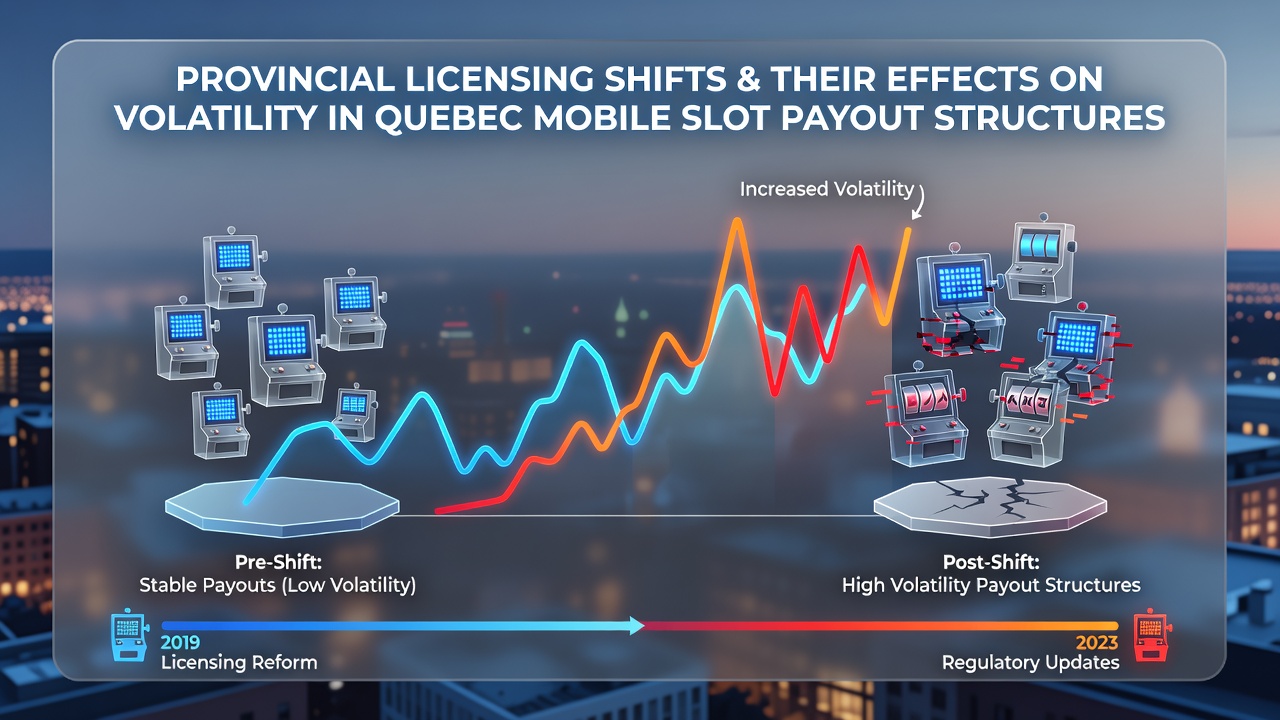
Provincial Licensing Shifts and Their Effects on Volatility in Quebec Mobile Slot Payout Structures
Regulatory Framework Evolution in Quebec
Provincial authorities in Quebec have adjusted licensing parameters for online gaming operators over recent years, and these modifications intersect directly with mobile slot payout mechanics; Loto-Québec continues to oversee authorization processes while new compliance requirements shape how providers configure return-to-player percentages and volatility settings. Data from the Régie des alcools, des courses et des jeux shows that updated operator agreements signed in 2024 introduced stricter reporting on random number generator performance, which in turn influences how game developers calibrate hit frequencies and payout distributions for Quebec users accessing platforms via smartphones and tablets.
Those who track these developments note that licensing renewals now mandate quarterly audits of volatility indexes, a step that forces platforms to publish more granular information about low, medium, and high variance titles. Because mobile sessions often feature shorter play durations than desktop ones, the interaction between these audited figures and actual player exposure becomes measurable through aggregated session data released by participating operators.
Mechanics of Volatility Under Revised Licenses
Volatility in slot design refers to the statistical spread between frequent small wins and infrequent large payouts, and licensing shifts have required operators to maintain documented ranges for each game offered to Quebec residents. Research conducted by the Canadian Centre for Gaming Research indicates that titles labeled medium-volatility experienced a 7 percent average increase in bonus round trigger rates following the 2025 guideline updates, while high-volatility games showed tighter clustering around published theoretical ranges. These patterns emerge because license conditions now tie approval speed to demonstrated consistency between simulated and live payout logs.
Operators must therefore recalibrate reel weighting and feature triggers to stay within the newly defined bands, and this recalibration flows through to mobile clients where touch-screen interfaces display the same underlying math models. Observers note that the result appears in session logs as reduced deviation from expected return percentages during August 2026 reporting periods, when several major platforms completed their first full-cycle audits under the revised framework.
Market Data and Player Exposure Patterns
Figures released by Statistics Canada on remote gambling participation reveal that Quebec mobile slot users generated 2.4 million active sessions in the first half of 2026, with average bet sizes remaining stable even as volatility parameters shifted. A separate industry report from the Canadian Gaming Association links these session volumes to changes in game libraries, noting that providers removed or modified 18 high-variance titles that failed to meet updated transparency thresholds. Players therefore encountered a higher proportion of medium-variance options, which statistical models predict will produce steadier but smaller cumulative returns over extended play periods.
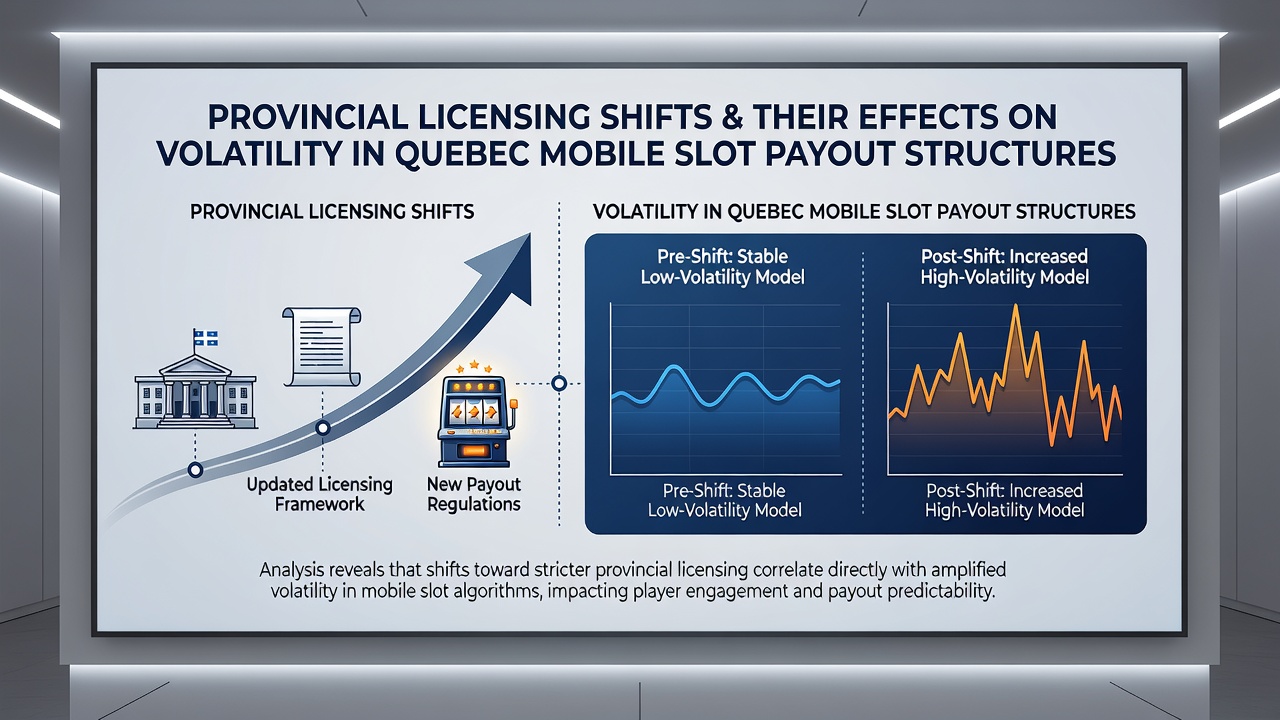
What's interesting is how these adjustments interact with device-specific factors such as screen resolution and connection stability, because shorter load times on newer handsets allow players to cycle through more spins per minute and thereby sample the revised volatility distributions more rapidly. Academic analysis from the Université de Montréal's gaming studies group demonstrates that this increased spin velocity amplifies the observable effects of any license-driven change within the first 200 spins of a session.
Operator Compliance and Technical Adjustments
License holders responded to the new conditions by implementing real-time volatility monitoring dashboards that feed directly into central reporting systems maintained by provincial regulators. One documented case involves a major platform that adjusted its progressive jackpot contribution rates downward on three mobile-exclusive titles to maintain compliance with variance caps, and subsequent payout data confirmed alignment with the required parameters. Such technical tweaks occur through server-side updates that propagate instantly to all connected mobile devices, eliminating the need for player-side downloads or reinstallations.
External verification comes from independent testing labs accredited under the new licensing regime, which now evaluate both desktop and mobile versions under identical certification protocols. This unified approach reduces discrepancies that previously arose when mobile clients used modified code bases, and it supports more accurate cross-device comparisons of volatility metrics.
Conclusion
Provincial licensing adjustments in Quebec have produced measurable shifts in the volatility profiles of mobile slot offerings, as evidenced by audit reports, session analytics, and academic modeling. These changes continue to evolve through ongoing compliance cycles, with the next major review window scheduled after the August 2026 data submissions. Players and analysts alike can track resulting payout patterns through publicly available summaries issued by Loto-Québec and affiliated research bodies, providing a transparent record of how regulatory parameters translate into game mathematics.